
Player · Footballopedia
Cristiano Ronaldo
Cristiano Ronaldo’s career spans Sporting CP, Manchester United, Real Madrid, Juventus and Portugal, with five Champions League titles, 140 competition goals and a UEFA EURO 2016 victory. Explore the tactical evolution behind his records.
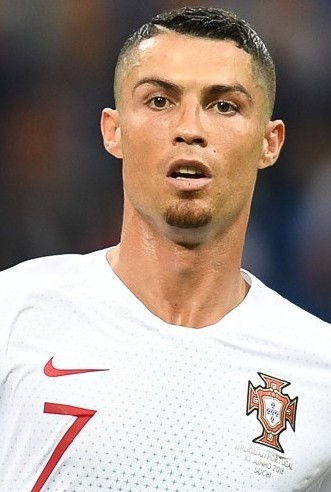
From Madeira to the Manchester United breakthrough
Born in Funchal on Madeira in 1985, Cristiano Ronaldo developed in the youth system of Sporting CP before joining Manchester United in 2003. His early reputation centred on stepovers, acceleration and the courage to confront defenders one against one. At United, especially under Alex Ferguson, those traits acquired a more disciplined end product. He learned to attack the far post, vary the timing of runs behind full-backs and generate shots from areas that had initially been used mainly for dribbling. The transformation was not immediate, which is why interpreting his career only through later goalscoring records misses an important first chapter. United's attack benefited from his growing understanding with Wayne Rooney and other teammates. By 2007–08, Ronaldo was both a wide attacking threat and an outstanding finisher, helping United win the Premier League and Champions League. His goal in the 2008 European final against Chelsea showed how aerial timing had become an additional weapon, not a replacement for his speed on the ground.
Real Madrid and the rise of the penalty-box scorer
Ronaldo's 2009 move to Real Madrid changed the scale of his club career. The team increasingly used him as a left-sided attacker with freedom to arrive centrally, and his game became more direct as the years passed. He could still cover long distances in transitions, but the defining question was often how quickly he could reach a dangerous shooting position. Madrid's forward play changed under several managers, and it is inaccurate to credit every successful phase to a single permanent system. José Mourinho's teams excelled at quick attacking transitions; later Madrid sides had different midfield balances and ways of controlling matches. Ronaldo combined with Karim Benzema and Gareth Bale while also benefiting from the work of Luka Modrić, Toni Kroos and defenders who sustained attacks. His scoring in knockout ties was central to Madrid's European rise. The 2014 Champions League success ended the club's long search for a tenth European crown, while victories in 2016, 2017 and 2018 made him a defining figure in the modern competition's most famous recent winning sequence.
Champions League records in their correct context
UEFA's official statistics credit Ronaldo with 140 Champions League goals in 183 main-competition appearances. He won five titles: one with Manchester United in 2008 and four with Real Madrid in 2014, 2016, 2017 and 2018. His 17 goals in 2013–14 remain the record for a single Champions League campaign as of September 2026. These figures should be presented with the competition and statistical scope identified: UEFA Champions League totals are not the same as an all-time European Cup player ledger compiled across different historical formats. Ronaldo's longevity matters alongside the peak seasons. He adapted to different defensive schemes, to fewer open spaces against elite opponents and to the physical demands of repeatedly playing knockout ties. A complete interpretation must also consider the teammates and tactical conditions that made a scoring chance possible. The records establish how productive he was; match context explains why those numbers accumulated in so many important games.
Portugal: from EURO disappointment to major titles
Ronaldo became an international figure while still a young Manchester United player. Portugal reached the final of UEFA EURO 2004 on home soil but lost to Greece, an experience that preceded years of tournament near misses. He captained Portugal during its successful EURO 2016 campaign. The final against France was unusual because he left the pitch injured in the first half and his teammates won through Éder's extra-time goal; describing it as a final decided by Ronaldo's scoring would misrepresent the match. His importance to the tournament was broader, including leadership, goals and the persistent threat he represented. Portugal also won the inaugural UEFA Nations League title in 2019. International scoring and appearance records should always carry an 'as of' date because Ronaldo continued playing long after most leading contemporaries had retired. UEFA's September 2026 record update lists him as having scored in six different World Cup tournaments, from 2006 through 2026. His international career therefore spans football generations and tactical eras.
Changing playing roles, Juventus and later career
Ronaldo's transfer to Juventus in 2018 took him from La Liga into Serie A and another tactical environment. He remained a high-volume scorer, but his positioning increasingly reflected the career of a penalty-box forward rather than a classic touchline winger. A return to Manchester United in 2021 produced another chapter under very different conditions from those of his first spell, before he continued his career outside the principal European leagues. Those changes should not be conflated with an identical impact in every competition. A useful career overview separates domestic league goals from European competition records and separates personal production from a team's overall achievements. It also explains how the physical profile of a player changes: fewer dribbles at maximum speed can coexist with greater attention to space, timing, anticipation and aerial play. Ronaldo's greatest historical distinction is the combination of spectacular peak performance with the capacity to remain influential after his playing role had changed dramatically.
Legacy and the comparison with Messi
The Ronaldo–Messi comparison became an organising debate for a generation of supporters, but a useful encyclopedia should resist turning every fact into a simplistic ranking. Their approaches were different: Ronaldo's explosive runs, vertical attacking and evolving focus on finishing contrasted with Messi's close control and capacity to create from deeper positions. Both were exceptionally productive, and both depended on teams organised to exploit their strengths. When comparing records, competitions, minutes, penalties, national-team circumstances and time periods all matter. Ronaldo's role in the history of Sporting CP, Manchester United, Real Madrid, Juventus and Portugal is best understood as a sequence of adaptations rather than one uniform performance. His five Ballon d'Or awards, five Champions League titles and national-team honours place him among the most decorated forwards of his era. The enduring football-history question is how he turned a gifted winger's raw attributes into two decades of elite-level production.